Shopping for new flooring is stressful enough. Then you start hearing terms like value, standard, premium, AC rating, and wear layer. They can sound like marketing labels, but to flooring professionals, these details reveal a lot about the quality, durability, and long-term performance of different flooring products.
Understanding flooring grades prevents you from overpaying for features you don’t need or choosing a lower-grade product that won’t hold up in your home. At King Flooring, we believe the best flooring decisions come from clarity, not confusion. That’s why we take the time to explain how grades work and what matters for your space, lifestyle and budget.
Let’s break down flooring grades so you can choose your flooring from your local flooring store with confidence.
Table of Contents
ToggleWhat Are Flooring Grades?
Flooring grades determine how a product looks, its durability and where it’s best used. Each flooring type has its own grading method, but the goal is still to help buyers understand the level of performance and appearance they’re getting.
Flooring grades answer questions like:
- Will this floor handle heavy foot traffic?
- How much variation should I expect in color or texture?
- Is this product better suited for a bedroom, living room or a rental property?
- Why does one version cost more than another?
Remember, the highest grade isn’t always the best option. The right grade matches how the floor will actually be used.
Hardwood Flooring Grades: Appearance Comes First
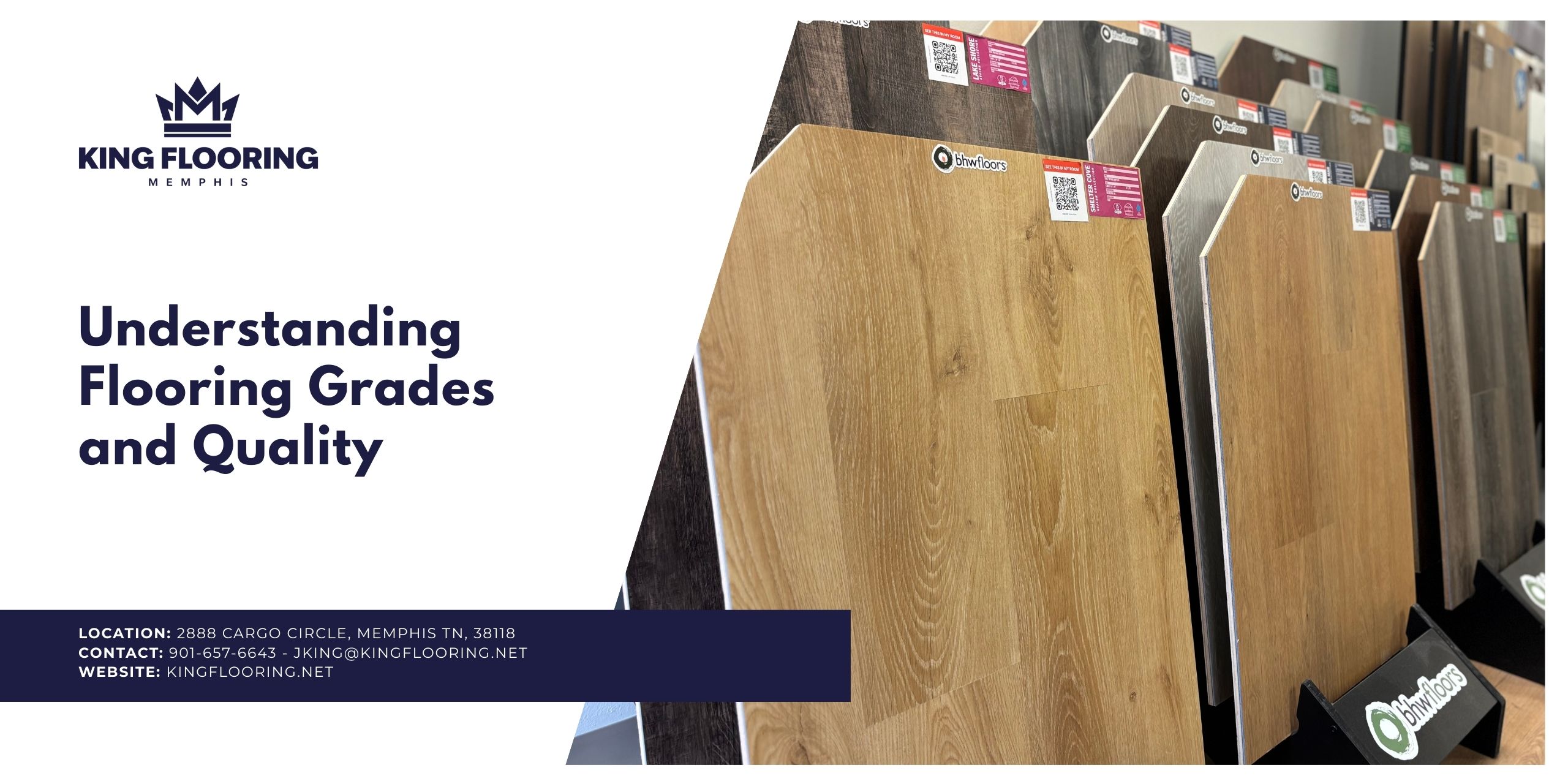
When it comes to hardwood flooring, grades are about appearance rather than strength. A lower-grade hardwood isn’t weaker, it looks different. Here’s an overview:
- Select or Premium Grade Hardwood: Characterized by a more uniform appearance, these floors have fewer knots, less color variation and a cleaner, more consistent look. This grade is best for formal living areas or homes with a polished, upscale aesthetic.
- Natural or Standard Grade Hardwood: This hardwood is defined by moderate color variation and occasional knots. It’s the best option for homes that mix appearance and value.
- Rustic or Character Grade Hardwood: Known for its natural variation, this hardwood uses knots, grain movement and color shifts as part of its design. This grade is commonly found in casual, farmhouse or rustic-style spaces. It’s also the most affordable of the group.
In Memphis, engineered hardwood is preferred because of the humidity. The grade still affects how engineered hardwood looks, but flooring installation quality and moisture management have a bigger impact on how long it lasts.
Laminate Flooring Grade: Understanding AC Rating
Laminate flooring is measured on a durability scale called the AC (Abrasion Class) rating. It determines how well the surface can resist wear and scratches. It ranges from AC1-AC5.
In most homes, an AC3 rating makes the most sense. It’s designed for heavy residential use and holds up to kids, pets and daily activity. Lower ratings like AC2 make more sense for bedrooms and less busy areas of the home.
Higher AC ratings like AC4 or AC5 are made for commercial environments. While durable, they’re often unnecessary for residential use and cost a lot more.
At King Flooring, we help homeowners choose laminate flooring grades that make sense for their spaces. This means choosing options that are strong enough to last without overpaying.
Vinyl Flooring Grades: Why the Wear Layer Matters
Vinyl flooring grades are defined by wear layer thickness, measured in mils. The transparent top layer protects the floor from scratches, stains and daily wear. It’s a key contributor to long-term performance. Here’s an overview:
- 6-12 mil Wear Layer: Best for low-use areas like guest rooms. While it offers basic protection, these floors will show signs of wear sooner in busy homes.
- 12-20 mil Wear Layer: This is the sweet spot for Memphis homes. It handles moderate to heavy foot traffic and balances durability with value.
- 20+ mil Wear Layer: Made for high-traffic homes, rental and properties with pets or kids, this grade resists scratches and wears better over time, reducing replacement costs.
Memphis in humidity. Consider SPC and WPC vinyl with proper wear layers because they’re some of the most reliable flooring options on the market.
Tile Flooring Grades: What PEI Ratings Tell You
Tile flooring uses PEI (Porcelain Enamel Institute) ratings to measure wear resistance. Here’s what you need to know:
- PEI 2 Tile: works for light residential use like bathroom floors.
- PEI 3 Tile: is best in residential spaces such as kitchens and living areas.
- PEI 4 and 5 Tiles: are made to handle heavy foot traffic, especially in commercial environments.
Tile is extremely durable, but you have to look into more than grades alone. Slip resistance, grout quality and professional installation also determine how your floors will perform over time.
How Flooring Grades Affect Price and Long-Term Value
Higher-grade flooring usually costs more upfront. However, the better long-term value offers:
- Longer lifespan
- Better resistance to wear
- Fewer repairs or replacements
Lower-grade options are more affordable upfront. However, they show wear faster in busy homes.
It’s not about buying the highest grade, it’s about buying the right grade for each space. For example, a premium-grade product isn’t necessary in a low-traffic room. Meanwhile a lower-grade floor in a busy space will lead to early replacement.
Choose the Right Flooring Grade for Your Needs
Flooring grades are there to protect buyers, not confuse them. If you’re still unsure, let the Memphis flooring professionals at King Flooring be your guide. We will help you choose flooring that fits your home, lifestyle and budget.
Ready to see flooring grades in person? Contact us to book a shop-at-home consultation today!